Why mempool.space Matters for Bitcoin Users
Most people first open mempool.space after something has gone wrong.
A payment has not confirmed. A wallet says the fee is too low. Somebody insists a transaction was sent, but the recipient cannot see it. Bitcoin is working; the user just cannot see what it is doing.
mempool.space made that part of Bitcoin legible. It turned node data into projected blocks, transaction diagrams, fee ranges, and a search box anyone can use. The public website is excellent. The bigger achievement is the open-source project underneath it: you can run the same explorer against your own Bitcoin node.
The moving blocks are more than decoration
A mempool is the set of valid, unconfirmed transactions a Bitcoin node currently knows about. It is not one official global waiting room. Nodes can see slightly different transactions because of timing, configuration, relay policy, and network conditions.
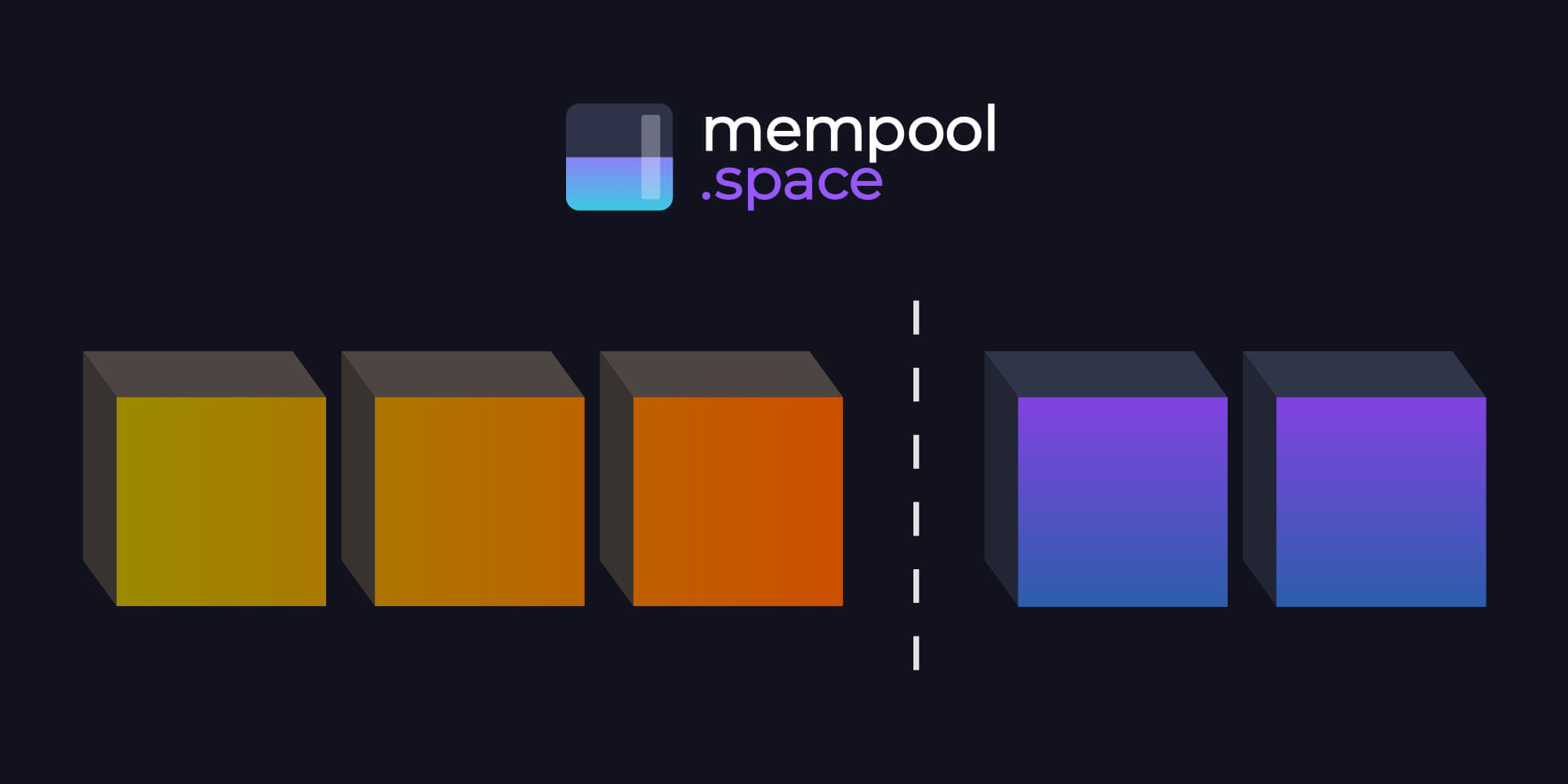
mempool.space visualizes its view as blocks waiting to be mined. Transactions paying higher fee rates tend to collect in the first projected block. Lower-fee transactions sit deeper. The block-space market becomes obvious in a few seconds.
The projection is still an estimate. A miner may build a different template, receive transactions the explorer has not seen, accept an out-of-band payment, or find a block before the screen updates. “Next block” means competitive at that moment, not guaranteed in ten minutes.
That is also how to use its fee recommendations. Look at the depth, decide how soon the transaction actually needs to confirm, then choose a rate. Do not blindly select “high priority” every time, and do not assume the cheapest visible rate will clear on your schedule.
A transaction page answers real questions
Paste a transaction ID into the search box and mempool.space shows whether it is pending or confirmed, the fee rate, total fee, size, inputs, outputs, and confirmation history. For a pending transaction, the page also shows its place in the current fee market.
That helps answer practical questions:
- Was the transaction broadcast at all?
- Did it confirm, or is it still sitting in a mempool?
- Was the fee rate reasonable when it was sent?
- Is Replace-by-Fee available?
- Is a parent or child affecting the package’s effective fee rate?
The project goes much deeper: mining and Lightning dashboards, block audits, RBF history, APIs, test networks, Liquid views, and more. It adds detail without making the basic transaction search hard to use.
The best feature is that you can run it yourself
The Mempool Open Source Project is AGPL-licensed and designed to be self-hosted. It supports one-click installs on several Bitcoin node platforms, plus Docker and manual deployments for people who want more control.
That matters for privacy. Looking up an address or transaction ID on a public explorer tells the operator that your IP address is interested in that data. Broadcasting through a public endpoint can link your network connection to the transaction as it first propagates.
A private Mempool instance connected to your own node removes the public query. It also lets you inspect what your node knows instead of treating somebody else’s website as an oracle.
Running Mempool does not replace Bitcoin Core. The node validates blocks and transactions. Mempool gives you a much better window into that node.
A small COLDCARD PushTx interop win
When we designed NFC PushTx, we kept the format public and simple. After signing, COLDCARD encodes the complete transaction and a checksum into a URL. Tap an NFC phone and it opens that URL in the browser. No dedicated app is required.
mempool.space implemented the format at mempool.space/pushtx. The page decodes the transaction, checks the checksum, broadcasts it, then opens the transaction page so the user can watch it enter the mempool and confirm.
The transaction is carried after the # fragment in the URL, so it is not included in the browser’s first request for the page. The browser still has to submit the transaction for broadcast, and a public service can see the phone’s network connection. Use your own PushTx handler or node when that association matters.
For a normal fully signed transaction, the relay cannot change a destination or amount without invalidating the signatures. It can still log the request, refuse service, or fail to propagate it. Transaction review happens on the COLDCARD before signing.
This is small interoperability done properly: a public specification, an independent implementation, no required app, and a custom-server option for users who want it.
Use it without outsourcing judgment
A block explorer reports one infrastructure stack’s view of Bitcoin. It cannot identify who controls an address, guarantee when a miner will include a transaction, or make a bad transaction safe. Never enter a seed phrase, private key, wallet backup, or passphrase into any explorer.
Use the public site to learn how block space behaves, check a transaction, and understand fees. When privacy or verification matters, run the project beside your own node.
mempool.space made Bitcoin easier to inspect without making it less Bitcoin. That is a project worth highlighting.